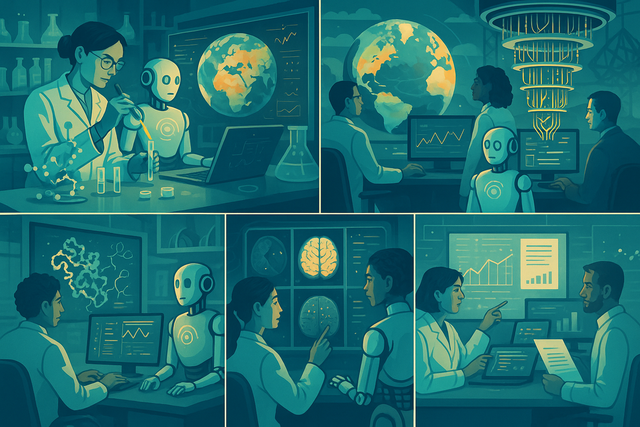
AI Healthcare Revolution: Breakthroughs Transforming Medicine in 2025
Written by
Infusible Coder Team2025 has marked a watershed year for artificial intelligence in healthcare, with breakthrough applications ranging from AI-powered medical devices to revolutionary drug discovery platforms. The transformation is happening at an unprecedented pace, with regulatory approvals, clinical implementations, and research breakthroughs occurring simultaneously across the global healthcare ecosystem
🏥 The Healthcare AI Revolution
AI is revolutionizing healthcare across medical imaging, drug discovery, predictive analytics, and personalized medicine: transforming patient outcomes worldwide.
📊 FDA Approvals: The Numbers Tell the Story
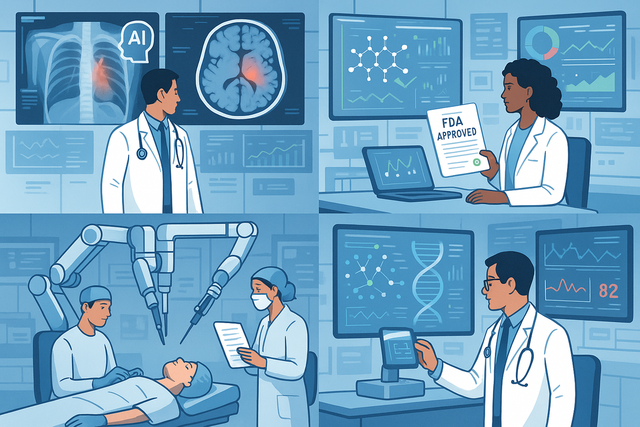
The regulatory landscape has evolved dramatically, with the FDA approving 223 AI-enabled medical devices in 2023, compared to just 6 in 2015. This 37-fold increase demonstrates both the maturation of AI technology and increasing regulatory confidence in AI-driven healthcare solutions
These approvals span diverse medical specialties:
🩻 Radiology
AI-powered imaging analysis and anomaly detection
❤️ Cardiology
Cardiac condition analysis and risk prediction
👁️ Ophthalmology
Retinal disease detection and diagnosis
🔬 Pathology
Tissue analysis and cancer detection
💡 The trend indicates that AI is transitioning from experimental technology to established medical practice across healthcare systems worldwide.
🧬 Google's Cell2Sentence-Scale: A Cancer Research Breakthrough
One of the most significant developments in 2025 has been Google's Cell2Sentence-Scale AI model, developed in collaboration between Google DeepMind, Google Research, and Yale University. This breakthrough represents a new approach to cancer therapy discovery
Built on the Gemma family of models, Cell2Sentence-Scale is designed to help the immune system identify and fight tumors more effectively:
- Worldwide accessibility for cancer researchers
- Immunotherapy focus on immune system enhancement
- Open collaboration between tech and medical research
- New therapeutic avenues for treatment development
⚡ DeepSomatic: Accelerating Genetic Analysis
Google's open-source DeepSomatic AI model is revolutionizing genetic analysis for cancer research. The model significantly speeds up the process of analyzing genetic data, potentially reducing the time required for genomic analysis from weeks to hours
This advancement is particularly crucial for personalized medicine approaches where understanding a patient's genetic makeup is essential for determining the most effective treatment strategies.
💊 AstraZeneca's AI Drug Discovery: MapDiff and Edge Set Attention
Pharmaceutical giant AstraZeneca has unveiled breakthrough AI technologies in drug discovery, featuring MapDiff and Edge Set Attention models. These innovations are revolutionizing protein design and molecular optimization
🔄 MapDiff
Understanding how proteins change shape and function dynamically
🔗 Edge Set Attention
Analyzing complex molecular interactions and binding sites
⚡ Acceleration
Dramatically faster development of therapeutic compounds
🎯 Precision
More targeted and effective drug candidates
🏥 Real-World Clinical Applications
🩻 Medical Imaging and Diagnostics
AI systems are now routinely assisting radiologists in detecting cancers, analyzing cardiac conditions, and identifying eye diseases. The key advantages include:
⏰ Consistent Quality
Analysis quality regardless of time of day or physician fatigue
🔍 Pattern Detection
Ability to detect subtle patterns invisible to the human eye
⚡ Rapid Processing
Rapid processing of large volumes of medical images
🔗 EHR Integration
Integration with electronic health records for comprehensive patient analysis
📊 Predictive Healthcare Analytics
AI models are increasingly being used to predict patient outcomes, identify high-risk patients, and optimize treatment protocols. These systems can:
- Predict disease onset before symptoms appear
- Identify at-risk patients for early intervention
- Optimize medication dosages based on individual characteristics
- Suggest personalized treatment plans tailored to patient profiles
🔬 Drug Discovery and Development
The pharmaceutical industry is leveraging AI to:
🎯 Candidate Identification
Identify potential drug candidates faster with AI screening
⚠️ Toxicity Prediction
Predict drug toxicity and side effects before trials
👥 Trial Optimization
Optimize clinical trial design and patient recruitment
⚡ Regulatory Speed
Accelerate the regulatory approval process
⚠️ Challenges in Healthcare AI Implementation
🔒 Data Privacy and Security
Healthcare AI systems must handle sensitive patient data while maintaining strict privacy standards. The challenge lies in developing AI models that can learn from patient data without compromising individual privacy56 .
📋 Regulatory Compliance
As AI systems become more autonomous in medical decision-making, regulatory frameworks must evolve to ensure patient safety while not stifling innovation. This includes establishing standards for AI validation, monitoring, and continuous improvement
🏥 Clinical Integration
Successfully integrating AI tools into existing clinical workflows requires careful consideration of:
- 👨⚕️ Physician Training: Comprehensive training programs and acceptance
- ⚙️ Workflow Optimization: Seamless integration into daily operations
- ⚖️ Liability Frameworks: Clear responsibility and accountability structures
- 🔗 Interoperability: Compatibility with existing healthcare systems
💰 The Economics of Healthcare AI
The economic impact of healthcare AI is becoming increasingly apparent. Key benefits include:
- Reduced diagnostic errors, saving lives and reducing malpractice costs
- Increased efficiency in clinical workflows and patient throughput
- Better resource allocation and capacity planning across facilities
- Accelerated drug discovery, reducing time-to-market for new treatments
🌍 Global Perspectives on AI Healthcare
🇺🇸 United States
The US leads in AI-enabled medical device approvals and has established frameworks for AI validation in healthcare settings. Major investments in AI research and development are supporting rapid innovation
🇪🇺 Europe
European healthcare systems are focusing on AI applications that improve patient outcomes while maintaining strict data protection standards. The emphasis is on ethical AI development and patient consent frameworks.
🌏 Asia
Countries like China and Japan are making significant investments in healthcare AI, with particular emphasis on aging population challenges and personalized medicine approaches.
🔮 Future Horizons: What's Next for Healthcare AI
🧬 Personalized Medicine
AI is driving the transition from one-size-fits-all medicine to highly personalized treatment approaches. By analyzing genetic, environmental, and lifestyle data, AI can suggest treatments tailored to individual patients.
🛡️ Preventive Healthcare
AI systems will increasingly focus on preventing disease rather than just treating it. Predictive models can identify health risks before they become serious problems, enabling early intervention.
🤖 Autonomous Medical Procedures
AI-powered robotic systems are beginning to perform complex medical procedures with greater precision than human surgeons, potentially reducing complications and improving outcomes.
✅ The Path Forward: Ensuring Responsible Healthcare AI
As healthcare AI continues to advance, several key principles must guide development:
1️⃣ Patient Safety First
Patient safety and well-being as the primary concern in all AI applications
2️⃣ Transparency
Transparency in AI decision-making processes and explainability
3️⃣ Continuous Monitoring
Continuous monitoring and evaluation of AI system performance
4️⃣ Equitable Access
Equitable access to AI-enhanced healthcare across all populations
5️⃣ Patient Autonomy
Respect for patient autonomy and informed consent requirements
The 2025 AI Index Report emphasizes that while AI healthcare applications show tremendous promise, ensuring safety, efficacy, and equity remains crucial for successful implementation57 .
📅 Looking Ahead: The Next 12-24 Months
The next two years will be critical for healthcare AI development. We can expect to see:
- 📈 Increased FDA approvals for AI medical devices across more specialties
- 🏥 Greater integration of AI tools into routine clinical practice worldwide
- 🧠 More sophisticated AI models for complex medical analysis and diagnosis
- 📋 Improved frameworks for AI validation and monitoring standards
- 🤝 Enhanced collaboration between tech companies and healthcare providers
As these technologies mature, we can look forward to a future where AI enhances human medical capabilities, leading to better patient outcomes, more efficient healthcare systems, and new possibilities for treating diseases that were previously considered incurable.
Sources and references
Review the article's recorded sources at their original locations. Legacy numbers are not necessarily list positions.
Put this AI approach to work
Infusible Coder designs production AI and software systems for businesses, and teaches practical AI skills through our training programs in Kohat and online.